FEATURE
CHANEL: Keeping Time with Tradition
WORDS SASHA SLATER
Photography: Tom Johnson
At first glance, it’s hard to see a connection between the CHANEL J12, a timepiece synonymous with elegance and refinement, and The Boat Race, which one former Olympian describes as “binary, brutal and British”. But look a little deeper, and similarities between the luxury house and the almost 200-year-old sporting duel emerge.
Gabrielle Chanel herself was a sportswoman at a time when that was an unusual, not to say eccentric, thing to be. More than that, she created the first line of jersey sportswear for women in 1913. “I invented the sports dress for myself,” she said. “Not because other women played sports, but because I did.” This was 14 years before the first Women’s Boat Race was even held. Gabrielle Chanel skied, she played golf, she rode horses - and she loved a beach, a yacht, a swimming pool.
“What CHANEL and The Boat Race really share is their values.”
Water flowed through her life story from her birth in Saumur, overlooking the Loire. If she wasn’t in Deauville, where she opened her second boutique, she was in Biarritz pioneering suntanning on a beach, or on the Venice Lido, or thigh-deep in a river in the Scottish Highlands, fishing with her lover Hugh Grosvenor, the second Duke of Westminster.
Indeed, Gabrielle Chanel was not simply a modern woman, she virtually invented the very idea of modernity in fashion. The first women to row for Oxford and Cambridge, in 1927, would have been among the most liberated of their generation. Highly educated, athletic, with shingled hair and knee-length dresses, the athletes perhaps weren’t even aware of the debt they owed to Gabrielle Chanel. She had bobbed her hair and raised hemlines to the knee fully a decade earlier, before donning mannish trousers and a fisherman’s striped t-shirt in a look that was so androgynous as to be revolutionary.
But more than the language of emancipation, what CHANEL and The Boat Race truly share is their values.
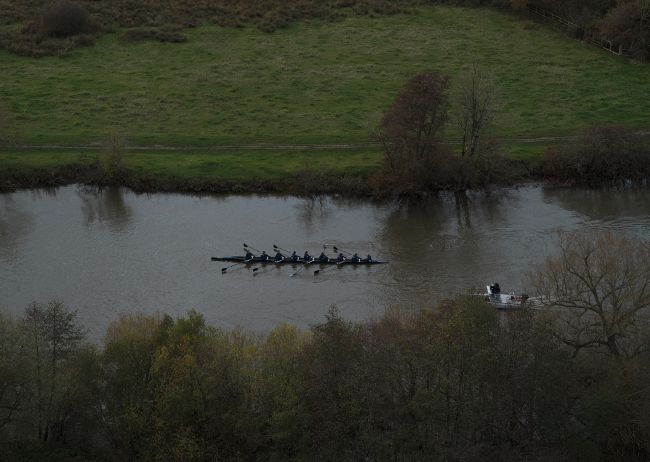
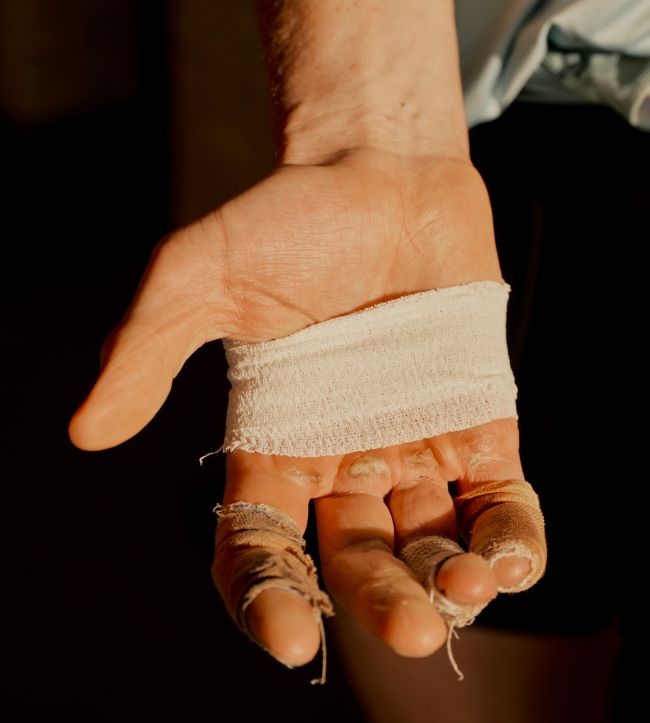
The preparation for The Boat Race is utterly gruelling. The athletes have to train twice a day for six days every week. They have pre-dawn sessions on freezing cold rivers in the dark depths of winter, and long hours on rowing machines in the gym to build up to the short, savage race. Each rower’s commitment has to be uncompromising. Surely, for most of them, this will be the biggest moment of their life. The only way to navigate the adrenaline, the emotion and the physical demands of those 19 or so minutes in the turbulent waters of the Thames, is with total focus, precision and trust in the team that surrounds them. The same is, of course, true of watchmaking, where preparation, inspiration and co-operation are essential. These are elite endeavours and only the best will ever be good enough.
One former Olympic rower describes The Boat Race as ‘binary, brutal and British’. Photography: Tom Johnson
Because it’s always the same antagonists, the same rivals, the two ancient universities with their contrasting liveries of light and dark blue, the competition has a tribal flavour. This adds spice without diminishing the essential cheerfulness of the occasion. Whether a Londoner has any real connection to one or other place of learning is irrelevant - most will automatically have ‘their’ boat, even if they couldn’t explain why they’re Cambridge rather than Oxford or the other way round. What’s more, in the novels of P. G. Wodehouse and Arthur Ransome, Boat Race day has a Dionysian flavour - a date on which normal rules don’t apply and diffident undergraduates suddenly blossom into Lords of Misrule. After all, it’s the start of spring. That mood is something Gabrielle Chanel herself would have understood perfectly. Her appreciation of Igor Stravinsky and her support of the Ballets Russes was at its height while he was staging the Sacre du printemps - which had caused a mini-riot of its own when performed for the first time. That too has its own pagan rites. In both the ballet and The Boat Race, youth and beauty sacrifice themselves to gods, either of the earth or of sport.
The Boat Race holds a unique position in the British consciousness because it’s as much a free riverside fiesta as it is a cut-throat rivalry that’s almost two centuries old. On a fine, sunny Saturday, a quarter of a million spectators will throng the embankments on the four-mile stretch from Putney Bridge to Mortlake, cheering, whooping and urging on their team. I have to declare an interest. I’m true (dark) blue: both my parents went there. I’ve been coming to the race, wearing loyal navy, since I was a small child. An old Russian artist friend of my grandmother had a house just by Putney Bridge that backed onto the embankment and she used to host an annual garden party for the occasion. Before the Thames Barrier was built, the river frequently burst its banks on race day, and we children would balance on the railings in wellington boots to avoid the flood, watching the lean piratical craft sweep by, and then running into the house to watch the television coverage crowded round a tiny black-and-white TV. For me, it’s a day that calls to mind bunting, wellies, hot-cross buns and paskha, a traditional Orthodox Easter cheesecake.
“The Boat Race holds a unique position in the British consciousness because it’s as much a free riverside fiesta as it is a cut-throat rivalry.”
For, as our Russian friend proves, this is not simply an event for Londoners and the two university towns. The contest resonates around the country and abroad, with parties happening everywhere from New York to Singapore. The potent narrative of eternal single combat, the unchanging course, and the beauty of the setting make this about more than sport. We all have our own version. This is the essential democracy of the occasion. And that too chimes with Gabrielle Chanel, for whom fashion was not about money or access or exclusion. Rather, for her, “fashion is in the sky, in the street, fashion has to do with ideas, the way we live, what is happening.” She created a dream of chic and style that everyone can share. Just as very few of the spectators by the river have a notion of the real experience of the competitors in The Boat Race. But they can still join the party. •